Subterranean termites (Reticulitermes flavipes) cause structural timber degradation by tunneling into load-bearing sill plates, rim joists, and subflooring from damp foundation soils. In older architectural pockets…
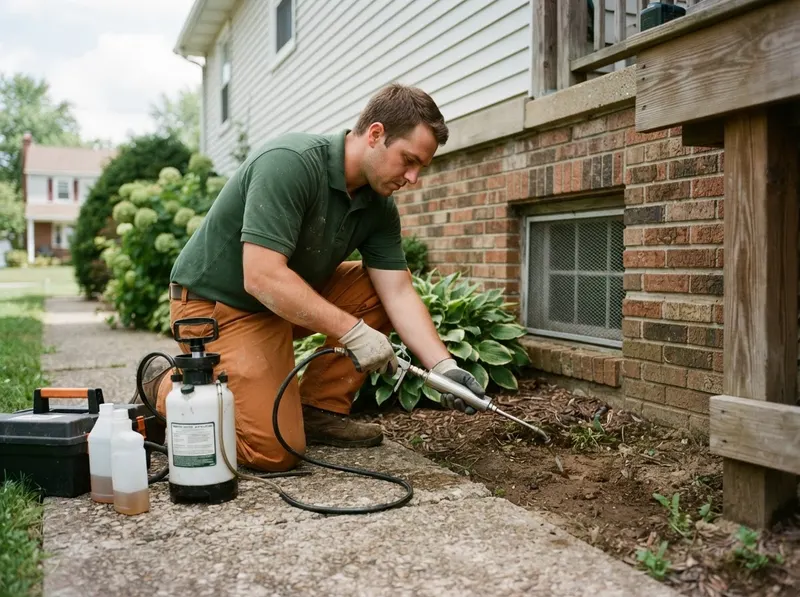
Subterranean termites (Reticulitermes flavipes) cause structural timber degradation by tunneling into load-bearing sill plates, rim joists, and subflooring from damp foundation soils. In older architectural pockets such as Federal Hill, Academy, and East Bayfront, historic sandstone, fieldstone, and stacked block foundations often sit below the natural grade, creating capillary dampness that draws foraging subterranean workers indoors. In lakeside neighborhoods like Frontier and Bayview, high annual lake-effect moisture levels keep soil humidity elevated year-round, increasing structural risk along structural framing corners. Evergreen Pest Management relies on low-impact Integrated Pest Management (IPM) rather than broad-spectrum chemical sprays, addressing subterranean colonies at the perimeter through non-volatile bait delivery and physical barrier monitoring.
Selecting between baiting systems and perimeter liquid trenching depends on the home foundation architecture and proximity to waterways. Concrete block basements in Marvintown, College Heights, and Glenwood allow for localized non-repellent exterior perimeter soil treatments that foraging termites transfer to the brood without releasing aerosolized residues into living rooms or food prep surfaces. For lakeside properties near Presque Isle Bay and the Erie Maritime Museum where groundwater depth is shallow, tamper-resistant exterior monitoring stations installed every 10 to 12 linear feet provide non-invasive subterranean colony eradication without saturating the surrounding soil with chemicals. Occupants typically remain inside the residence throughout the entire treatment process, avoiding family displacement.
Property owners evaluating remediation options must balance the immediate stoppage of liquid perimeter trenches against the slower, systemic colony elimination of below-ground bait networks. Liquid barrier applications deliver immediate exclusion along the foundation footprint, though they require discreet drilling through adjoining concrete flatwork, such as patios or garage aprons. In contrast, baiting networks require no structural drilling through exterior masonry but depend on foraging workers feeding consistently across a 60 to 90 day window to collapse the queen and reproductive core. Evergreen Pest Management evaluates structural condition, moisture entry, and footprint perimeter dimensions during an initial visit to deliver an uninflated, linear-foot price quote before any treatment starts.
Every job gets a firm, written price after a free on-site visit.
Tell us about your termite control job in Erie and we'll send a clear, written quote, usually the same day.
 Evergreen Pest Management